
The Nation’s Leader in
Microgrid Development

At PowerSecure, we specialize in advanced microgrid solutions designed to deliver continuous and redundant on-site power generation during grid disruptions, such as severe weather events, capacity constraints and regional outages. While these systems remain connected to the utility grid under normal conditions, they’re engineered to operate independently through islanded microgrid operation when grid service becomes unreliable.

Our approach centers on on-site microgrid power that supports facilities with complex energy needs, evolving regulatory requirements and limited tolerance for downtime. By coordinating multiple energy generation sources, PowerSecure helps organizations maintain stable operations while strategizing for long-term energy needs.

Equally important, PowerSecure sources generation and storage technologies based on site-specific goals, fuel availability and operational requirements. Organizations can then balance their energy mix while strengthening energy reliability across critical loads.

What Our Advanced Microgrid Systems Include

Enterprise microgrid solutions use proven, high-performance components that support continuous power microgrids and resilient microgrid architecture. These systems include:

  • Reciprocal Engines such as Tier 4 Final Certified Factory Diesel or EPA Certified Natural gas generators for continuous on-site power generation. Both solutions adhere to the strictest emission standards to help minimize your environmental impact.
  • Renewable fuels, integrated solar photovoltaic systems or fuel cell technology as part of a hybrid generation microgrid configuration
  • Battery energy storage systems that support microgrid load balancing, frequency control and seamless transitions during grid disturbances

Hybrid microgrid solutions enable generation assets and storage technologies to operate together as multi-asset microgrid systems. Improved microgrid reliability solutions help maintain stable voltage and frequency across changing load conditions.

Moreover, we actively monitor your system, providing scheduled maintenance and long-term operational support as part of an end-to-end microgrid delivery model.

Microgrid Solutions
Microgrid Logo

Welcome to our Microgrid

Microgrid Logo

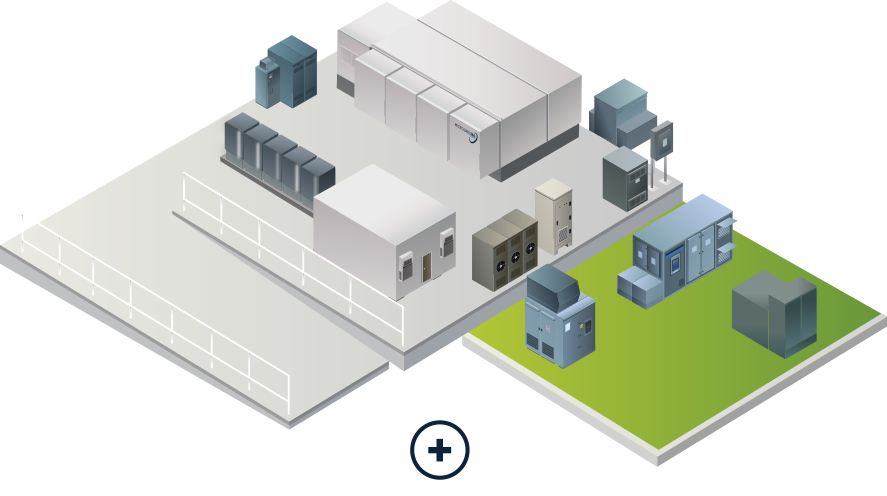
A microgrid is a localized group of electricity generation sources, energy storage systems and loads that typically operate in parallel with the centralized grid. When necessary, the system transitions to islanded microgrid operation to maintain power during outages and continue protecting sensitive equipment and critical services.

PowerSecure solutions integrate advanced control systems and modular infrastructure to support scalable microgrid systems across campuses, industrial facilities and critical infrastructure. Our onsite microgrid features:

Map railing
Map Icon 1

NexGear switchgear

NexGear Switchgear connects the AC output of the microgrid to the rest of the system.
Map Icon 2

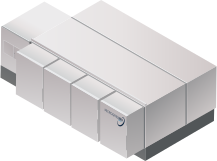
Powerblock

Fully integrated power generation system which includes two 625kW EPA Tier 4 Final diesel engines, controllers and monitoring software in our 4-bank PowerBlock enclosure.
Map Icon 3

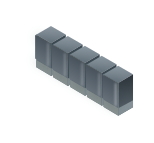
Fuel Cells

Fuel Cell distributed power generation system that provides always-on, primary power. System includes 50kW, 480VAC power source fueled by natural gas.
Map Icon 4

Battery Energy Storage System

The Battery Energy Storage System is 852.32kWh, equaling 500kW, with 704-913 VDC and 0.5 C-battery rating.

Map Icon 5

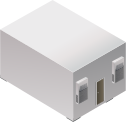
Power Equipment Center (PEC)

The PEC encloses the Battery Energy Storage System and the DC Switchgears. The switchgear components interconnect energy storage, fuel cells and the photovoltaic (PV) system into a single output.

Map Icon 6

Inverters

Map Icon 7

Photovoltaic Inverter

Regulates the power flow from the rooftop solar system to the microgrid.
Map Icon 8

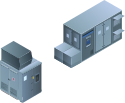
Fuel Cell Load Bank 

This load bank system serves the Fuel Cells in using its energy output to test, support or protect the power source in the event of an outage.

Map Icon 9

Utility Transformer

The connection point to the utility power source.
Map Icon 10

Solar

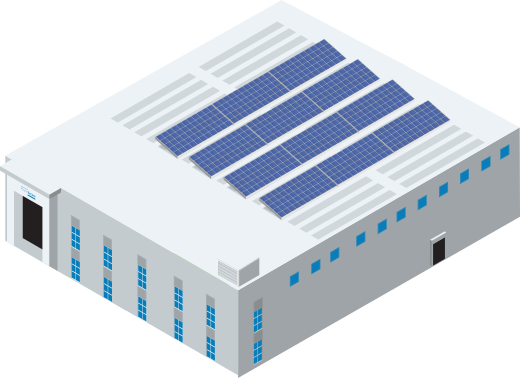
PowerSecure's 200kW PV system, with 47 strings of 12 PV modules, serves as a renewable fuel source for the microgrid.

Map Icon 11

Fuel Cell Load Bank

This load bank system serves the Fuel Cells in using its energy output to test, support or protect the power source in the event of an outage.

Map Icon 12

Fuel Cell Load Bank Emergency Switch

Map Icon 13

Microgrid Transformer

The Microgrid Transformer equals 1000kVA.

Close

EXPLORE THE COMPONENTS OF AN ADVANCED MICROGRID.
 

Understanding the PowerSecure Advantage

Microgrid technology has existed for decades, but not all systems are designed to support continuous, complex operations. Many basic microgrid configurations rely on limited control capabilities or single-fuel generation strategies that restrict long-term flexibility.

PowerSecure designs solutions using modular microgrid design principles. This approach supports scalable microgrid systems that adapt as energy needs evolve, whether serving hospitals, data centers, manufacturing campuses or municipal infrastructure.

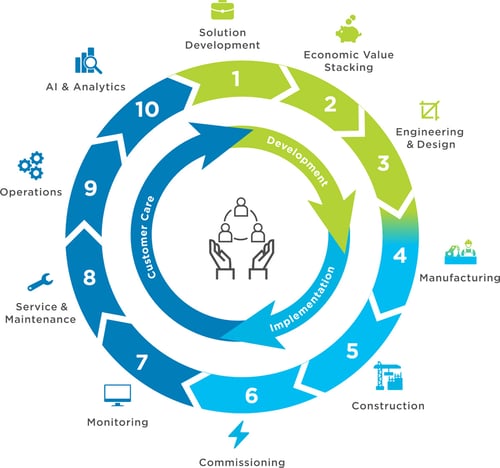
Our turnkey solutions are truly end-to-end, with PowerSecure managing environmental studies, system design, procurement, construction and financing. Post-installation services include real-time system monitoring and on-site maintenance for long-term operational reliability.

Microgrid 360 wheel

Advanced Microgrid Solutions Designed for Complex Energy Environments

Advanced microgrid solutions differ from basic microgrid systems in both capability and purpose. They’re thoughtfully designed for facilities with complex load profiles, multiple energy assets and little tolerance for power disruptions.

Organizations typically need advanced microgrid solutions when operations demand stable power quality, continuous on-site power generation and coordinated interaction between multiple distributed energy resources. Data centers, hospitals, industrial campuses and mission-critical public infrastructure are all popular examples.

Through integrated microgrid architecture, advanced systems coordinate generation assets, battery energy storage and grid interaction. Sophisticated control systems manage microgrid load balancing, frequency regulation and seamless transitions between operating modes while maintaining power quality across sensitive equipment.

Advanced microgrids are engineered to operate during both grid outages and normal grid conditions, supporting long-term energy planning, regulatory compliance and changing

Measurable Savings

Hybrid microgrid solutions that combine distributed energy resources, energy storage and advanced controls can improve long-term cost management while boosting operational resilience. PowerSecure works with utility companies and large energy users to align microgrid solutions with operational goals, regulatory requirements and future energy strategies.

Schedule a consultation with a PowerSecure energy expert to explore how enterprise power resiliency solutions can support your organization.

PowerSecure logo

Frequently Asked Questions

When does a facility need an advanced microgrid instead of a basic microgrid?

Facilities with variable loads, strict uptime requirements and complex regulatory obligations often require advanced microgrid solutions. Basic systems may support limited backup needs, while advanced systems coordinate multiple energy assets to maintain operation across changing conditions.

How do advanced microgrid solutions manage multiple energy sources at once?

Advanced microgrid control systems orchestrate generation, battery storage and grid interaction in real time. These systems manage microgrid load balancing, voltage stability and frequency control while coordinating seamless transitions between assets.

How are advanced microgrids designed to adapt to changing energy and regulatory requirements?

Modular microgrid design allows systems to evolve as regulations, fuel availability and operational needs change. PowerSecure’s integrated approach supports future expansion of energy storage, additional generation assets and updated compliance requirements without disrupting existing operations.