
May. 19, 2026
Key Takeaways:
Time-to-revenue is the period between initial capital investment and when a data center begins generating income through live tenant operations.
It includes:
- land and construction spend
- infrastructure deployment
- commissioning and validation
- tenant go-live
Revenue only starts when customers are actively using the facility.
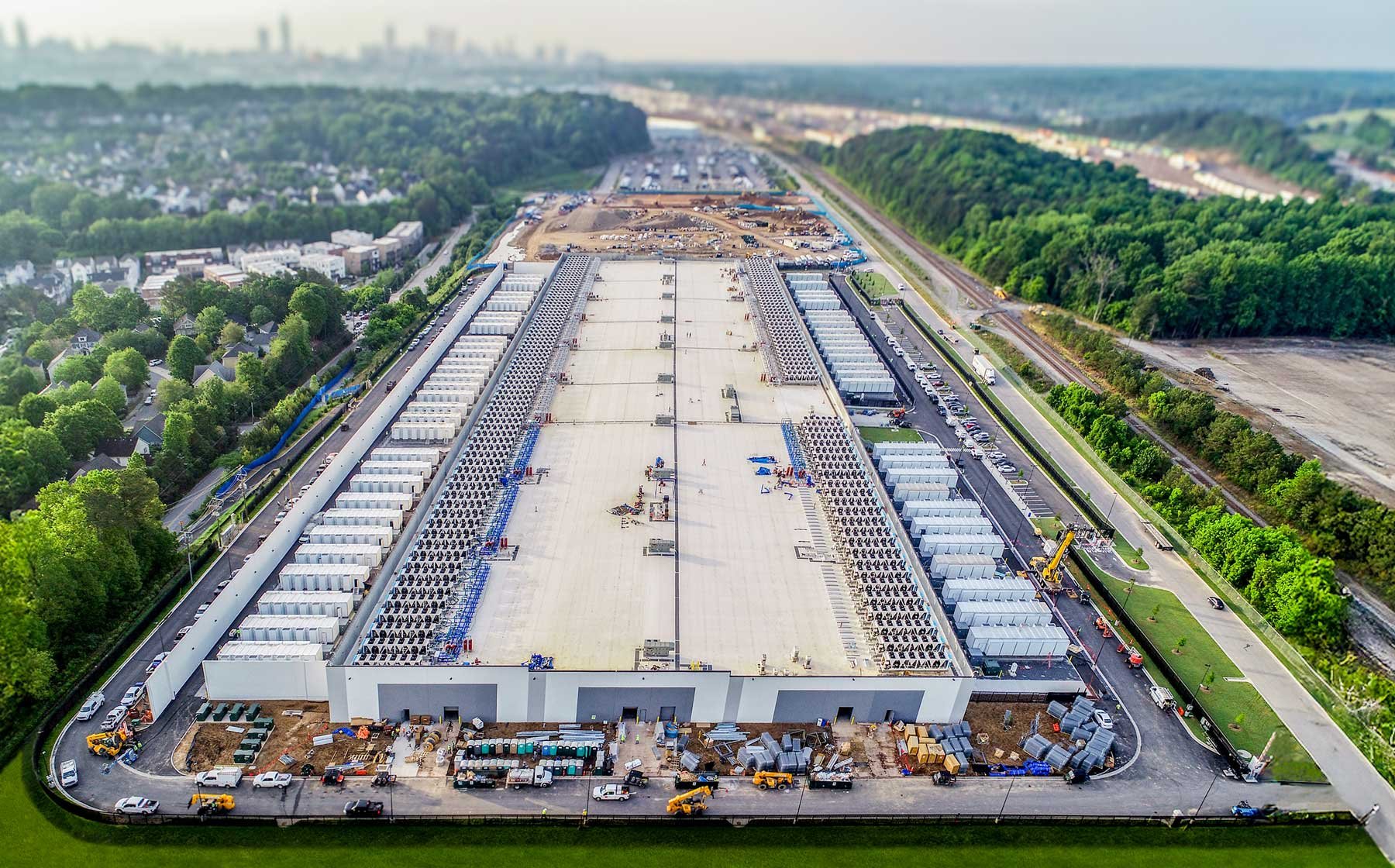
Two Facilities. One Decision.
Let’s walk through two projects.
Same market.
Same size.
Same demand signal.
On paper, they should perform the same.
But one starts generating revenue months—sometimes years—earlier than the other.
And the difference comes down to a decision made before construction even begins—and how each team responds when the grid doesn’t cooperate.
Starting Assumptions
In the first project, the team starts with energy.
They sit down with the utility early. They don’t just ask if power is available; they ask when, how much, and how reliable that timeline actually is. They build their schedule around what’s confirmed.
In the second project, the team pushes forward faster.
They secure land. They finalize the design. They break ground.
They know power may not align with construction, but they will bring in a solution later.
At this point, both look fine.
But then reality shows up.
The Same Problem Hits Both Projects
Grid constraints are driving interconnection delays.
There are now more than 10,000 projects in U.S. interconnection queues, representing over 1,400 GW of generation capacity, with typical timelines stretching past four years from application to operation.
This is the environment both projects are operating in.
And this is the moment where they split.
Why Bridge Power Changes the Timeline
Without power, a data center is static.
With bridge power, it becomes active.
Project One can:
- begin commissioning immediately
- validate systems under real load
- onboard tenants in phases
While Project Two is waiting, Project One is operating.
That’s the difference.
They don’t skip the interconnection queue. They work around the delay.
The Financial Impact Shows Up Fast
Let’s connect this back to what really matters.
Speed-to-revenue.
Project Two eventually reaches the same point.
Once the facility approaches go-live, they will still need to procure and install standby generators to meet uptime and redundancy requirements.
Because this purchase happens later and independently of any earlier power strategy, the result is often duplicative infrastructure planning and less efficient capital deployment. In some cases, interim solutions introduced late in the project lifecycle can become partially utilized or stranded as permanent systems are layered in afterward.
But in the meantime:
- financing costs continue
- capital sits idle
- potential tenants look elsewhere
Even a six-month delay in revenue can materially impact IRR.
Stretch that to a year or more—and you’re looking at a different investment outcome entirely.
So when people ask, how do delays in power availability affect data center ROI?
This is the answer.
They don’t just delay revenue. They compress returns and increase risk.
Cost Optimization: Time Is the Hidden Variable
Most teams focus on operational efficiency when they think about cost.
Cooling systems. Energy pricing. Maintenance.
All important.
But one of the biggest cost drivers is time.
Every month without revenue:
- interest accumulates
- project costs continue
- assets produce nothing
Project One spends more upfront to deploy bridge power.
Project Two spends less initially—but pays for it later in lost time.
So the real question isn’t just: “How do we reduce cost?”
It’s: “How do we reduce the time before revenue begins?”
This is where the backup strategy changes the equation. What appears as incremental upfront spend is actually a reallocation of future capital. Instead of paying for temporary acceleration and then again for permanent backup systems, Project One consolidates both into a single investment path.
The Metrics That Tell the Story
If you compare these two projects, the difference shows up clearly in the metrics:
- speed-to-revenue
- IRR
- utilization ramp
- revenue per MW
Speed-to-revenue—ultimately time-to-revenue—drives all of them.
Because once revenue begins, everything else starts to stabilize.
Project One gets there first.
What Allows Project One to Move Faster
What ultimately sets this project apart is the thinking that led to it. From the beginning, the team approached the project with a clear understanding of real power constraints, not idealized timelines. They made key infrastructure decisions early, anchoring design and execution to what could actually be delivered. When those constraints became more apparent, they adapted, using flexible energy solutions to keep progress moving.
Bridge power, in that sense, isn’t a one-off tactic. It’s part of a broader philosophy: don’t let the grid dictate your timeline.
Energy Strategy Becomes Revenue Strategy
This dynamic becomes most visible during commissioning, where the two projects begin to diverge in a meaningful way. Project Two may have reached construction completion, but it struggles to move forward from there. Without reliable power, system validation slows down, testing becomes compressed into a narrower window, and overall risk begins to build as teams try to make up lost time.
Project One, by contrast, arrives at this stage with momentum already in place. Because systems have been running under load, the team moves steadily through testing and validation, maintaining control of the timeline rather than reacting to it.
That continuity is what ultimately makes the difference. Project One transitions cleanly into revenue, while Project Two is still working to catch up.
And solutions like bridge power and microgrids make it possible to:
- decouple timelines from grid uncertainty,
- start commissioning sooner and
- generate revenue earlier.
So What Actually Determines the Winner?
Both projects get built.
Both eventually run at capacity.
But one becomes profitable sooner.
The faster you can move from:
- built → commissioned → operational
The faster capital starts working.
If you strip everything back, the equation is simple.
Power enables commissioning.
Commissioning enables deployment.
Deployment generates revenue.
You just need power to move forward. And in a market where interconnection delays now stretch for years, that difference between waiting and moving is what separates projects that perform from those that fall behind.
So the real question isn’t:
“How fast can we build?”
It’s:
“How fast can we start generating revenue if the grid isn’t ready yet?”