
Feb. 23, 2026
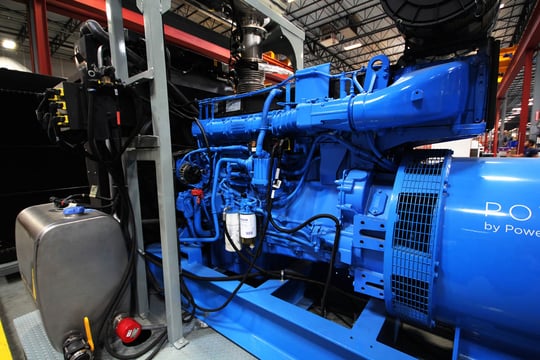
Understanding Generator Efficiency in Commercial and Industrial Power Systems
For those who would be standing in a mechanical room at 2 a.m if the power goes out. Who have watched generators carry hospitals through hurricanes, data centers through grid hiccups, and watched factories through those “don’t‑you‑dare‑stop” production runs. When the lights flicker and the load screen spikes, nobody asks for a white paper. You want continuous facility power that does what it promised.
So let’s talk about generator efficiency, and not just as a brochure term, but the way it behaves in your building, at your different load levels, on your schedule.
In the field, you need to look at two kinds of efficiency:
- Fuel conversion efficiency: how cleanly the machine turns fuel into electricity (fuel per kWh, heat rate, real fuel efficiency across a curve).
- Operational efficiency: how closely your engineered generator integration matches the loads you actually see hour by hour. That’s generator efficiency by load profile, not just “best case” on a spec sheet.
A standby unit that jogs a few hours a year behaves differently from one doing onsite power generation for critical facilities. And yes, efficiency tradeoffs in onsite power generation are just that: tradeoffs. You balance fuel access, maintenance requirements, runtime requirements, emissions, and the system controls that keep everything honest.
If there’s a theme here, it’s simple: efficiency and reliability depend on how you size, dispatch, and maintenance.
Comparing Efficiency Across Load Profiles and Operating Conditions
Here’s the thing, too many folks miss: efficiency rides on sizing. Oversize the unit and run it at light load all day, and you’ll see partial-load efficiency penalties, like more fuel per kWh than you expected, maybe even wet‑stacking (a.k.a soot build up) on diesel units if you’re not loading them properly. Undersize it, and you’ll wring the machine out to keep up.
The best advice:
- Map your week, not just your peak. Generator sizing considerations should match how you actually operate.
- Understand how both fuels and generators behave under different load levels. Diesel vs gas at 30% is not diesel vs gas at 85%.
- Don’t judge off a single “best point.” Judge off generator efficiency in commercial facilities as they run: starts/stops, shoulder loads, overnight baseload, and those “everything on” moments.
The “winner” in a generator fuel efficiency comparison shifts with load variability, runtime expectations, and dispatch strategy. Not trying to fence sit, but this thinking is how we keep plants online without surprises.
Efficiency Beyond Fuel:
Maintenance, Lifecycle, and System Integration
You have to remember: you don’t just buy efficiency; you maintain it.
What matters over time:
- Lifecycle efficiency of generators: tune‑ups, filters, fluids, aftertreatment care, valve sets, the works. Miss intervals and you’ll pay at the meter.
- Integrated power systems: real efficiency isn’t only at the crankshaft. Controls, switchgear, and commercial energy monitoring catch poor dispatch, excessive idling, and bad handoffs between assets.
- Operator discipline: exercising under load, testing ATS transfers, and letting the data tell you where your curves drift.
A well‑designed system, run by people who take it seriously, stays efficient. A great machine without a plan becomes a noisy paperweight.
Emissions, Regulations, and Environmental Performance
Let’s keep this practical. Gas typically puts out fewer combustion emissions than Tier 2 diesel setups, and that matters in a lot of markets. But Tier 4 Final diesel changes things. Cutting NOx and particulate matter while keeping that diesel response you need for spiking loads. And now, renewable diesel (HVO) is reshaping it again with drop‑in reductions up to 90% lifecycle CO₂ without the headaches of equipment conversion.
Regulations are local. Runtime categories matter. Don’t overgeneralize. Put environmental performance in context with your usage pattern, and make sure your compliance plan fits your actual operations, not a theoretical one.
Diesel and Natural Gas Generators Within Integrated Microgrid Systems
In a microgrid, a generator isn’t a hero working alone; it’s part of a sports team. Advanced microgrid systems use smart controls and dispatch to right‑size runtime, sequence assets, and keep engines near their sweet spots. That’s how microgrid generator efficiency goes up without buying more.
Why I like hybrid generation systems, engines can provide reliability. While UPS or Battery Storage systems can smooth ramps so engines don’t chase every blip.
Choosing the Right Generator Based on Efficiency and Operational Fit
- Map the truth of your load. Peaks, valleys, shoulder hours, seasonal quirks. That’s generator efficiency for commercial facilities in the real world.
- Be honest about fuel reality. Deliveries, storage limits, pipeline reliability, and seasonal pricing. That’s your commercial microgrid fuel strategy planning baseline.
- Consider your energy market. Certain market programs have regulations on runtimes, emergency use scenarios, and testing.
- Engineer the system. Controls, switchgear, monitoring, and engineered generator integration that lets assets work smart, not just hard.
- Decide like an operator. What can your team support? What failure modes are acceptable? What uptime do you truly need?
There isn’t a universal “better.” There’s only better‑aligned to your facility. Sometimes that’s diesel. Sometimes it’s natural gas. Solving a piece of the puzzle so your operational reliability and efficiency stack up over the long haul.